Scientific Paradigms: A Case for Science and Technology Studies
I entered the University as a prospective chemistry major, looking for answers and truths about life, health, and healing. It appeared to me that it was in the sciences that these truths would lie. I assumed that chemistry and biochemistry, being more quantitative life sciences than biology or ecology, would provide a more accurate, precise, and complete account of living things. However, after three semesters of almost exclusively science courses including introductory chemistry, introductory biology, molecular biology, organic chemistry, and neurobiology, I found myself somewhat discouraged. Despite the fact that I had gained a great breadth of knowledge about chemical principles and biological systems, there were certain questions which I did not seem to be any closer to answering.
“Science education is lying to you until you are ready for the truth,” stated one of my chemistry professors one morning, quoting one of his professors from undergrad. I understood this remark to be commenting on the way in which the complexities of the world’s phenomena must be simplified in order to be communicated to and grasped by the minds of students.
However, in that statement there were also other ideas implied, such as;
- All things are ultimately knowable through science
- The method for understanding phenomena lies in characterizing their complexities to finer and finer degrees of specificity
- There exist some things which are ultimately true about the world that lie beyond many years of study
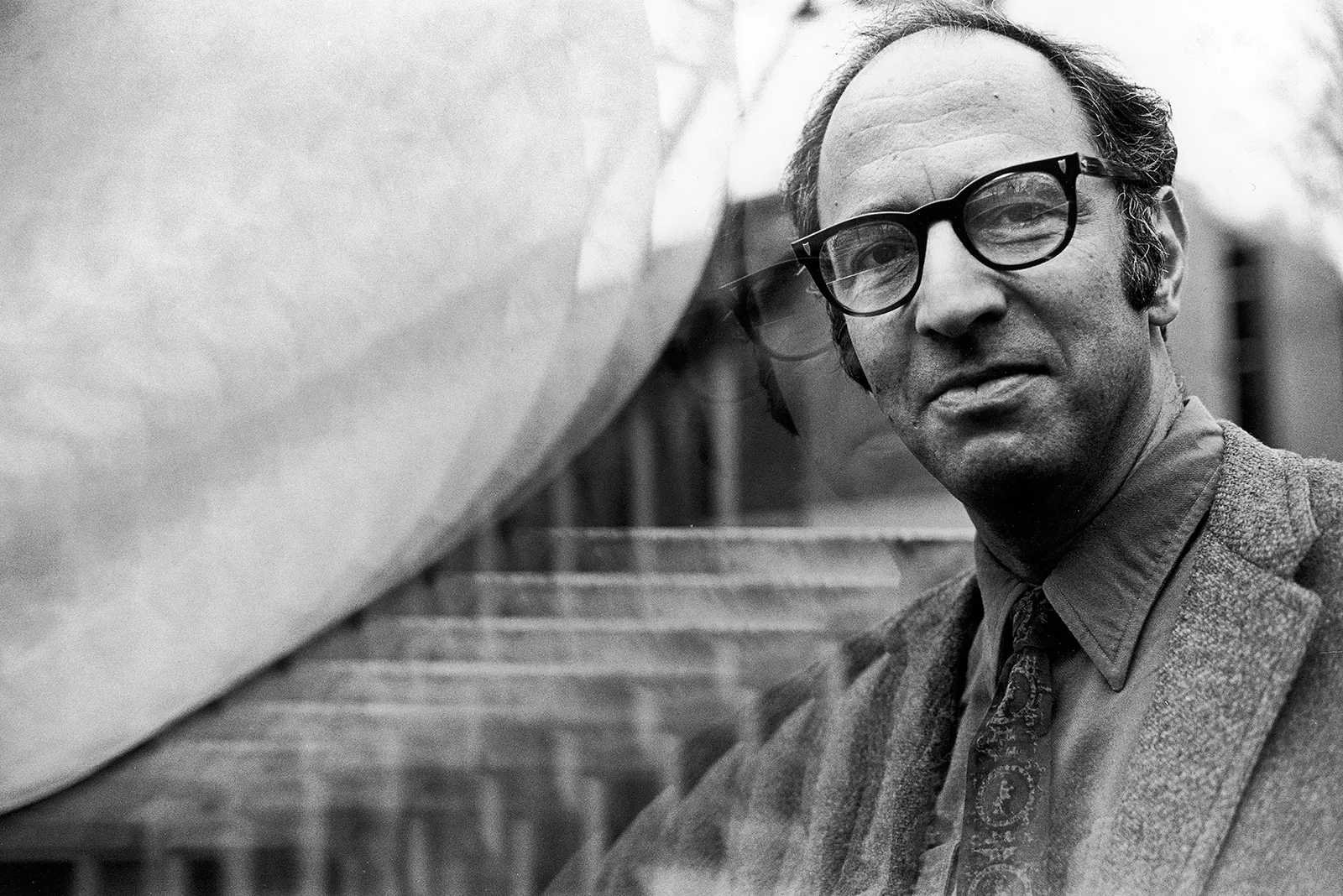
These ideas made sense to me, and I continued in my studies, accepting the fact that many years of schooling were ahead of me if I was truly committed to gaining access to the understanding and answers I was after. Residing in the back of my mind for some time, the implications of this statement came to my attention when I stumbled upon a copy of Thomas Kuhn’s 1962 book titled The Structure of Scientific Revolutions.
At the time of the book’s publication, Kuhn was a historian of science, but twenty years earlier, he was a PhD candidate at Harvard studying monovalent metals under the mentorship of John Van Vleck (the same man who is the namesake of Wesleyan’s observatory). Entrenched in the physical sciences, the shift to a career studying the history of science was not one he predicted. Kuhn first encountered this field when he was asked to develop a course teaching physics for non-scientists. As he developed the curriculum, he encountered historical accounts of physical science that he had not read in school, nor in his independent interest in philosophies of science. These accounts revealed a progression of scientific development quite different from that which he had believed for the entirety of his academic career. This new understanding was not only fascinating, but it also contradicted foundational ideas he had about science and scientific progress. In his book, Kuhn provides a superior account of how the study of the history of science completely changed the course of his career. My intention here is to simply introduce and discuss his most famous idea of scientific paradigms and its relevance to an undergraduate level of scientific study.
Kuhn defines scientific paradigms as “universally recognizable scientific achievements that for a time provide model problems and solutions to a community of practitioners.” [1] Instead of a steady progression towards increased understanding, Kuhn suggests that science advances through revolutions. These revolutions provide new frameworks that account for observed inconsistencies in previous ones. One of the most famous examples of a scientific revolution is Einstein’s theory of relativity, which overturned Newton’s laws of motion in the field of physics. This new set of laws, or paradigm, was able to account for discrepancies between Newton’s predictions and the observed universe. The theory of relativity advanced scientific understanding and also invalidated large bodies of inquiry that had been based on Newtonian mechanics. This understanding contradicts the perception which Kuhn previously held of scientific progress moving consistently in the forward direction, or growing outwards as individual contributors build upon former discoveries.
That science has not proceeded through consistent deepening of understanding, but through upheavals and replacements of frameworks and theories, is valuable for two reasons. First, it is a more accurate representation of the history of the field. Second, and I believe more importantly, it provides insight into the way science functions today. If all science is done in a paradigm, the current ways we are working towards understanding the world through science are based in a paradigm. This paradigm came about at some point in time, superseded a previous one, and will likely, at some point, be overturned by a new one. If we consider the fact that the models which serve as foundations for our scientific understanding are neither permanent nor inevitable ways of advancing towards the truth, certain questions arise. What are the scientific achievements that serve as models for present-day scientific inquiry? What do our current paradigms account for that previous ones could not? What might our current paradigms not be able to account for or explain?
With these questions in mind, I began to consider what might be behind my discouragement and the unanswered questions that arose in my studies. My broad curiosity about human health developed into a more specific interest in chronic disease, specifically cardiovascular disease and metabolic conditions. The prevalence of these illnesses is shocking, with almost fifty percent of adults in the US suffering from cardiovascular disease.[2] The fineness of cardiac imaging continues to improve, the relevant literature continues to accumulate, and medical sophistication continues to deepen. The modern medical field has the deepest, most detailed understanding of the molecular character and mechanisms of this condition in human history. And yet, heart disease is the leading cause of death in the United States [3], even though it is known to be a largely preventable condition[4]. Physicians, those individuals who presumably possess the greatest understanding of heart disease and prevention, also most commonly die of cardiovascular disease, although they do experience it at lower rates.[5][6]
The fact that there are looming issues that have not yet been able to be addressed by advanced scientific inquiry was discouraging to me, as it appeared as though these issues are unsolvable by the knowledge that lies beyond many years of dedicated study. The idea of paradigms, however, introduced a new perspective. If science is one of the many lenses through which one can view the world, and this perspective is known to change, then the problems which seem quite difficult or even impossible might not be so forever. There are likely solutions that lie in future paradigms, based on achievements that have not yet been made. Instead of unsolved problems serving as evidence for potential failures for scientific inquiry, Kuhn’s understanding of scientific paradigms introduces the possibility for improved frameworks that allow us to find solutions that are not yet visible.
This type of thinking about science that provides context and historical perspectives is given a variety of names, but at Wesleyan it is under the department of Science and Technology Studies, or STS for short. Like Kuhn, and many science students before me, an introduction to this field has dramatically altered and enriched my understanding of science and its potential for acting as a positive force of change. Given this, I encourage all students who are curious about, discouraged by, or indifferent to the frameworks science is built upon to take an STS class, read Kuhn’s book, and explore for themselves how this field is much more dynamic than it might appear from its introductory courses.
References:
1. Kuhn, T. S. (1962). The Structure of Scientific Revolution. University of Chicago Press.
2. Cardiovascular disease: Types, causes & symptoms. Cleveland Clinic. (n.d.). https://my.clevelandclinic.org/health/diseases/21493-cardiovascular-disease
3. Centers for Disease Control and Prevention. (2026, February 5). FastStats - Leading Causes of Death. Centers for Disease Control and Prevention. https://www.cdc.gov/nchs/fastats/leading-causes-of-death.htm
4. Prevention. World Heart Federation. (2026, August 11). https://world-heart-federation.org/heart-health/prevention/
5. Blecker, S., Johnson, N. J., Altekruse, S., & Horwitz, L. I. (2016). Association of Occupation as a physician with likelihood of dying in a hospital. JAMA, 315(3), 301. https://doi.org/10.1001/jama.2015.16976
6. Ko, D. T., Chu, A., Austin, P. C., Johnston, S., Nallamothu, B. K., Roifman, I., Tusevljak, N., Udell, J. A., & Frank, E. (2019). Comparison of cardiovascular risk factors and outcomes among practicing physicians vs the general population in Ontario, Canada. JAMA Network Open, 2(11). https://doi.org/10.1001/jamanetworkopen.2019.15983