
Psychology in the Age of TikTok
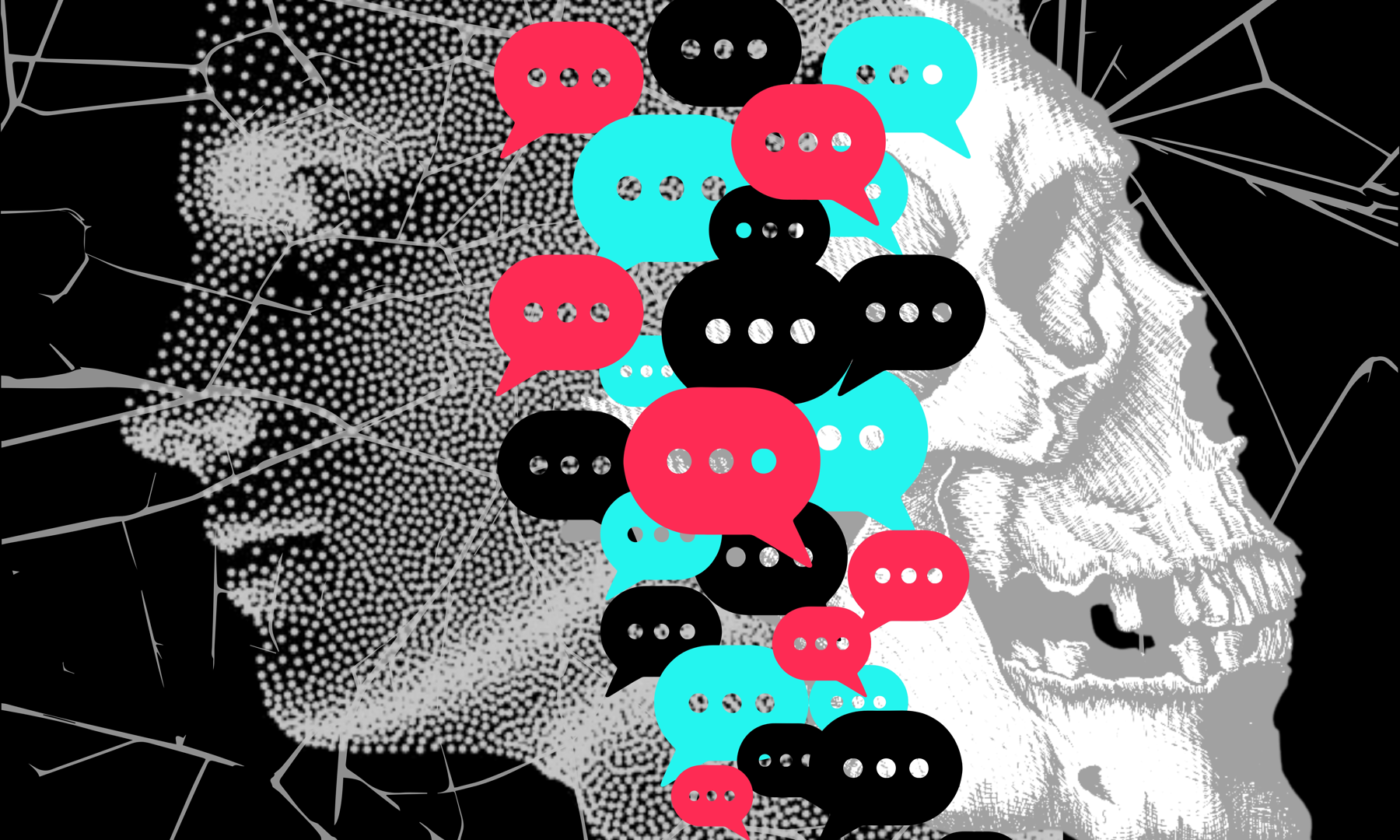
Spend enough time on TikTok and eventually the app might start to diagnose you.
Maybe you constantly lose your keys. Attention-deficit/hyperactivity disorder (ADHD). You overthink a text from someone you're dating. Anxious attachment. You hate confrontation. Trauma response. You organize your desk instead of starting an assignment. That might be ADHD, too.
Psychology has become a huge part of TikTok. Terms like attachment styles, intrusive thoughts, dissociation, hyperfixation, and trauma responses are now used pretty casually online, even though many come from much more specific clinical or research contexts. For some people, TikTok may be the first place they hear these terms at all.
There are real benefits to that. People can hear from others with similar experiences, find language for things they have struggled to explain, and watch mental health professionals talk about psychology for free. Pretorius et al. (2022) looked at TikTok and Instagram posts from mental health professionals with large followings and found that about 68 percent of the TikTok posts were educational.
Psychology is complicated, though, and TikTok is built around content that people can understand quickly. Turning a psychological concept into a short, relatable video almost always requires simplifying it. The question becomes how much of the context, nuance, and complexity behind that concept gets lost along the way.
When a Symptom List Isn't a Diagnosis
ADHD is probably the clearest example. Videos about ADHD often focus on experiences like constantly losing things, procrastinating, zoning out during conversations, or being unable to start a task. Someone watching might recognize themselves almost immediately.
Yeung et al. (2022) analyzed 100 of the most popular TikTok videos about ADHD and found that 52 percent were misleading. Only 21 percent were considered useful, while the other 27 percent focused on personal experiences.
The misleading videos were not necessarily describing fake symptoms. Instead, they often took real experiences that can occur across many psychological conditions and presented them as specific to ADHD. Of the 52 misleading videos, 71 percent included symptoms that can also occur in other psychological conditions, such as anxiety, depression, anger, mood swings, dissociation, and relationship problems (Yeung et al., 2022). Someone watching might genuinely relate to what the creator is describing. The problem is assuming that because the experience fits, the explanation must fit too.
A 2025 study found a similar pattern. Researchers compared the characteristics attributed to ADHD in 100 popular TikToks with the diagnostic criteria in the Diagnostic and Statistical Manual of Mental Disorders, Fifth Edition, Text Revision (DSM-5-TR), the primary manual used by mental health professionals in the United States to diagnose mental disorders.
The researchers also looked at how viewers responded in the comments. Almost 60 percent of commenters identified with the behaviors or experiences being described, and some went a step further by questioning whether they might have ADHD themselves (de Vries et al., 2025).
Of course, people without ADHD procrastinate, lose things, and get distracted. Stress, anxiety, depression, sleep problems, and other factors can also affect attention and motivation. Clinicians diagnosing ADHD are looking for a persistent pattern of symptoms and impairment, not whether someone relates to a few behaviors on a list.
Finding misinformation on TikTok is one thing. Whether people actually believe it is another. One study looked at this experimentally by randomly assigning 490 college students to watch TikTok-style videos containing accurate ADHD information, ADHD misinformation, or neutral content. Students who watched the misinformation came away with less accurate knowledge about ADHD, while also becoming more confident in what they thought they knew.
The misinformation group also reported greater intentions to seek both evidence-based and non-evidence-based ADHD treatments. So the effects were not limited to getting a few facts about ADHD wrong. They also shaped what people were willing to do next (Schiros et al., 2025).
At the same time, concerns about self-diagnosis are complicated by the fact that ADHD has historically been missed in some groups. During childhood, ADHD is diagnosed less frequently in girls than in boys. Girls with ADHD are more likely to show inattentive and internalizing symptoms and may be less likely to display the hyperactive or disruptive behaviors that tend to get noticed by parents and teachers. Anxiety and depression can also complicate the recognition of ADHD in girls (Quinn & Madhoo, 2014).
For someone who has struggled with attention or organization for years without understanding why, hearing another person describe their experience with ADHD could actually be useful. It might be what first leads them to look into ADHD or eventually bring it up with a professional. That is not the same thing as watching a video and deciding it confirms a diagnosis.
Branigan (2026) recently reviewed the research on ADHD content on TikTok and found consistent concerns about misinformation and the tendency to present fairly common behaviors as signs of ADHD. The review also cautions against dismissing someone's concerns just because they started on TikTok. TikTok might be where someone first notices experiences that could be related to ADHD, but recognizing yourself in a video is different from knowing whether ADHD is actually causing those experiences.
Attachment Theory Becomes a Label
ADHD is not the only psychological concept that looks a little different on TikTok. Attachment theory, which describes how people form and experience emotional bonds in close relationships, has basically become its own genre of content.
On TikTok, attachment is often explained through a few recognizable types: secure, anxious, avoidant, and fearful-avoidant. There are quizzes to figure out which one you are, videos about what happens when different attachment styles date each other, and lists of behaviors that supposedly reveal someone's type. That turns something as complicated as how a person relates to others into a clean, shareable label.
Actual attachment research is more complicated. Researchers often study attachment-related anxiety and avoidance as dimensions rather than sorting everyone into separate groups. Fraley et al. (2015) directly tested whether attachment was better represented by categories or dimensions and found stronger evidence for the dimensional model. Attachment patterns can also change over time and look different depending on the relationship or context (Fraley, 2019).
The label can still describe something real about how someone experiences relationships, but it leaves out a lot of the complexity. Attachment-related anxiety and avoidance exist to different degrees, these patterns can change, and the same person may not act the same way in every relationship. “Anxiously attached” is a much easier label to put in a TikTok bio.
Attachment isn't the only concept getting this treatment. Words like "trauma," "triggered," and "intrusive thoughts" have also taken on much broader meanings online. Haslam (2016) describes this as "concept creep," where concepts related to harm and mental health gradually expand to include a wider range of experiences. Sometimes that can be useful, especially when it gives people language for experiences that might otherwise be ignored or minimized. It can also make it harder to tell where ordinary distress ends and clinically significant symptoms begin.
Intrusive thoughts are a good example. The term comes up frequently in discussions of obsessive-compulsive disorder (OCD), a disorder involving recurring unwanted thoughts and repetitive behaviors or mental acts, but unwanted thoughts are not unique to people with OCD. Rachman and de Silva (1978) found obsession-like thoughts in people without a clinical disorder too. What differed was how often the thoughts occurred, how long they lasted, how intense they were, and the effect they had on the person.
Someone might hear the phrase "intrusive thought" on TikTok and realize it describes something they have experienced. Having a name for it can be helpful, but the name alone does not explain what is causing it.
What TikTok Actually Gets Right
It would be hard to talk about TikTok and psychology without acknowledging just how many people are now talking about mental health because of it. Lau et al. (2024) analyzed 100 popular videos under #teenmentalhealth that together had around 144 million views. Teens and therapists were among the main creators, and common topics included personal experiences, coping and treatment, humor, relationships, and mental health campaigns.
What was much less common was evidence-based treatment information. Only one of the 100 videos included evidence-based treatment content (Lau et al., 2024). That does not mean the other 99 videos were harmful or inaccurate. A lot of mental health content on TikTok serves a different purpose. People share their own experiences, talk about what has helped them, or describe what living with a particular disorder actually feels like.
Personal stories can provide something that diagnostic criteria cannot. Reading the DSM criteria for ADHD tells you how the disorder is diagnosed. Hearing someone with ADHD describe spending hours trying to make themselves start an assignment gives you a different kind of information. That experience can be useful to hear about without being true of everyone with ADHD.
Mental health professionals have also built large audiences on TikTok. Pretorius et al. (2022) found that about two-thirds of the posts from mental health professionals they studied were educational. Some helped viewers recognize specific mental health difficulties or encouraged attitudes supportive of seeking appropriate help. Even professional content had limitations, though. References to research were uncommon, and psychoeducation was often simplified when adapted for social media. The study also could not determine whether viewers actually sought help after watching the videos.
Checking whether someone is a mental health professional only tells you so much about the quality of a psychology TikTok. A therapist can oversimplify something, while someone without a psychology degree can accurately describe their own experience. What matters is also what kind of claim the person is making. There is a big difference between "this is what my ADHD looks like" and "if you do these five things, you have ADHD."
TikTok has changed how people encounter psychology. Someone can hear a term they have never heard before, listen to another person describe an experience that sounds exactly like their own, and start looking for more information within a few minutes. For someone whose symptoms have been overlooked, coming across the right video might be what leads them to start looking for answers.
The problem is that TikTok is much better at introducing psychological language than providing all of the context behind it. A short video might introduce someone to ADHD, attachment theory, trauma, or intrusive thoughts, but there is usually more to the story than what fits on a screen. The same behavior can have different explanations, and recognizing yourself in someone else's experience is different from knowing why you experience it.
That does not make the video useless. It might give someone a term to look into or a reason to bring something up with a professional. But figuring out what that experience actually means usually takes more than a TikTok. If something you see raises a concern about your own mental health, keep looking. Read information from reliable sources, talk to a mental health professional if the concern persists, and remember that recognizing yourself in a video can be a reason to ask questions without being the answer itself.
References
Branigan, K. (2026). What is the quality of ADHD content on TikTok, and how might this affect self-diagnosis? A systematic literature review. Educational Psychology in Practice. https://doi.org/10.1080/02667363.2026.2644889
de Vries, W., Batstra, L., & van Assen, A. (2025). Exploring concept creep: Youth’s portrayal of ADHD on TikTok. SSM - Mental Health, 8, Article 100489. https://doi.org/10.1016/j.ssmmh.2025.100489
Fraley, R. C. (2019). Attachment in adulthood: Recent developments, emerging debates, and future directions. Annual Review of Psychology, 70, 401–422.
Fraley, R. C., Hudson, N. W., Heffernan, M. E., & Segal, N. (2015). Are adult attachment styles categorical or dimensional? A taxometric analysis of general and relationship-specific attachment orientations. Journal of Personality and Social Psychology, 109(2), 354–368. https://doi.org/10.1037/pspp0000027
Haslam, N. (2016). Concept creep: Psychology’s expanding concepts of harm and pathology. Psychological Inquiry, 27(1), 1–17. https://doi.org/10.1080/1047840X.2016.1082418
Lau, N., Srinakarin, K., Aalfs, H., Zhao, X., & Palermo, T. M. (2024). TikTok and teen mental health: An analysis of user-generated content and engagement. Journal of Pediatric Psychology.
Pretorius, C., McCashin, D., & Coyle, D. (2022). Mental health professionals as influencers on TikTok and Instagram: What role do they play in mental health literacy and help-seeking?. Internet interventions, 30, 100591. https://doi.org/10.1016/j.invent.2022.100591
Quinn, P. O., & Madhoo, M. (2014). A review of attention-deficit/hyperactivity disorder in women and girls: uncovering this hidden diagnosis. The primary care companion for CNS disorders, 16(3), PCC.13r01596. https://doi.org/10.4088/PCC.13r01596
Rachman, S., & de Silva, P. (1978). Abnormal and normal obsessions. Behaviour research and therapy, 16(4), 233–248. https://doi.org/10.1016/0005-7967(78)90022-0
Schiros, A., Bowman, N., & Antshel, K. (2025). Misinformation mayhem: the effects of TikTok content on ADHD knowledge, stigma, and treatment-seeking intentions. European child & adolescent psychiatry, 34(11), 3521–3533. https://doi.org/10.1007/s00787-025-02769-8
Yeung, A., Ng, E., & Abi-Jaoude, E. (2022). TikTok and Attention-Deficit/Hyperactivity Disorder: A Cross-Sectional Study of Social Media Content Quality. Canadian journal of psychiatry. Revue canadienne de psychiatrie, 67(12), 899–906. https://doi.org/10.1177/07067437221082854